What is composable technology and why should you care?
Composable technology is a highly debated topic, currently at its peak in terms of interest from marketing technology professionals. With the hype come inflated expectations, different interpretations and vendors using it left, right and centre to describe their solutions. In this first episode of our 3-part series, we break it down into the essentials and explain why you and your organisation should care.

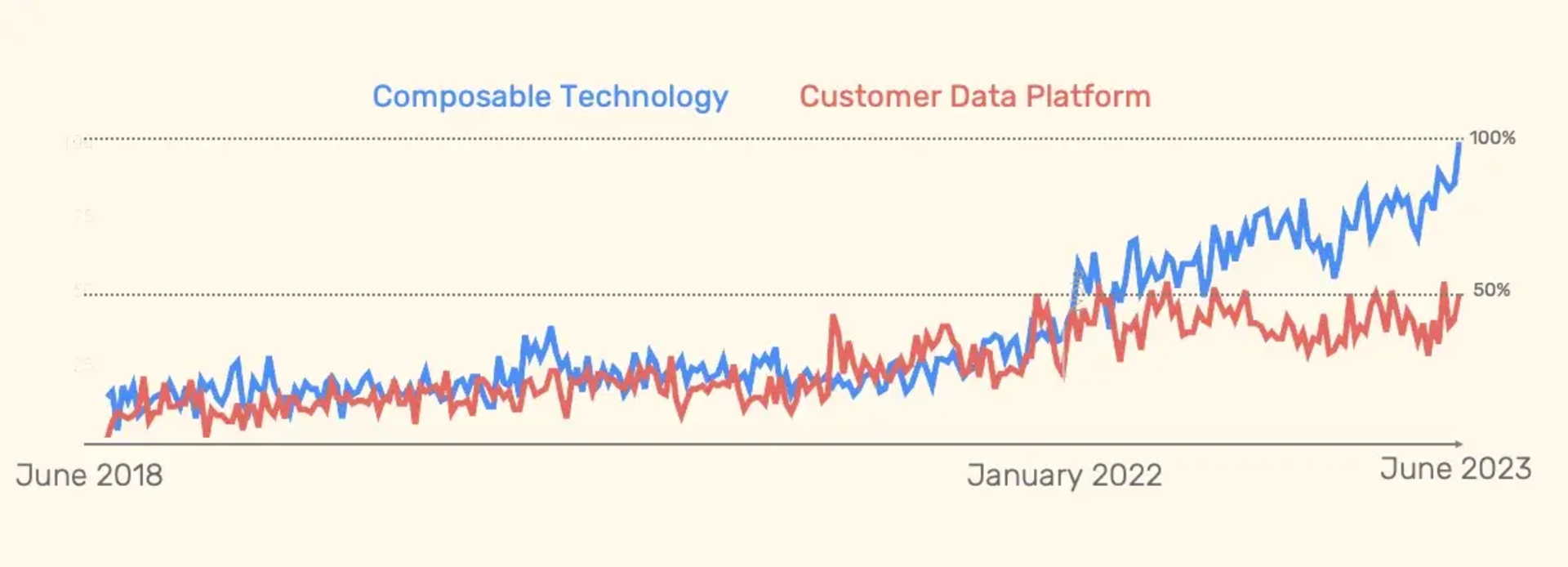
Figure 1: Composable technology is at its peak interest right now, comparing to ‘Customer Data Platform’ for reference.
According to MultiMinds, composable technology revolves around four key pillars:
Ecosystem thinking
Specialisation
Interoperability
Building blocks
Over the years, MarTech vendors have come to realise they cannot meet all customer needs by themselves. Instead, they have started to focus more on co-creation, collaboration, and synergies with other solutions as part of an ecosystem thinking mentality. This has in turn lead to a specialisation of tools, where instead of vendors trying to build and sell complex “do it all” solutions, they have focused on one single task or purpose and doing that extremely well. This specialisation was accompanied by a proliferation of MarTech tools to fill every possible niche, fuelled by the constant pressure of disruptive innovation the marketing sector has known over the last two decades (e-commerce, social networks, smartphones, apps, chatbots, generative AI…). Combined, the specialisation and proliferation of tools has also forced the industry to invest in interoperability, where connections between different solutions can be automated and data can be exchanged in well-defined formats without the need of people manually copy pasting records from one tool to the next. Ultimately, this has produced building blocks, allowing companies to assemble, disassemble and reassemble best of breed components based on their needs.
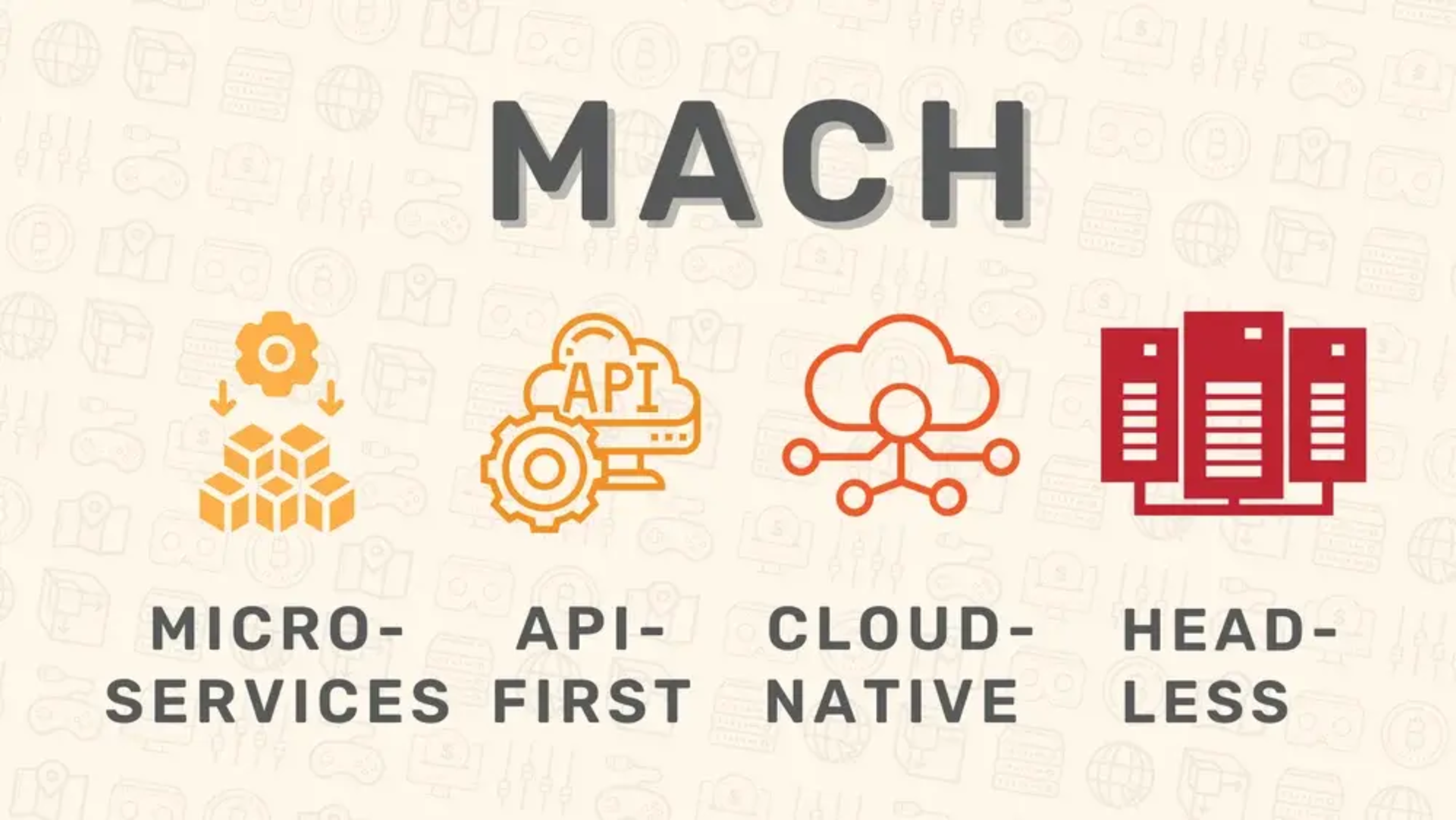
These building blocks are mostly based on the same technology principles, defined with the acronym ‘MACH’:
Microservices: building blocks for software applications. Each microservice performs a specific task and works together with others to create a complete application.
APIs: facilitate a service-oriented development approach, enabling internal communication between microservices and external integration with third-party systems.
Cloud-native: enables applications to easily handle increased demand or workload by providing flexible resource allocation, ensuring optimal performance and availability.
Headless: allows for more flexibility and customisation for a better customer experience. It enables independent updates and improves the front and backend without affecting each other.
For our more technical reader base, these principles won’t be new. Within IT and Software Engineering, these have been best practices and principles for the past 20 years, allowing developers to ‘compose’ applications. It’s only in the past 5 years, however, that the bridge between marketing technology and ‘traditional’ IT has been getting smaller and smaller. What is new though, is the ability to build business solutions in a ‘composable’ way through the rise of low-code and no-code platforms (for example: Microsoft PowerApps). Looking at the next 5 years, Generative AI is poised to take us the rest of the way with its ability to translate natural language into code for processing data and connecting to APIs.
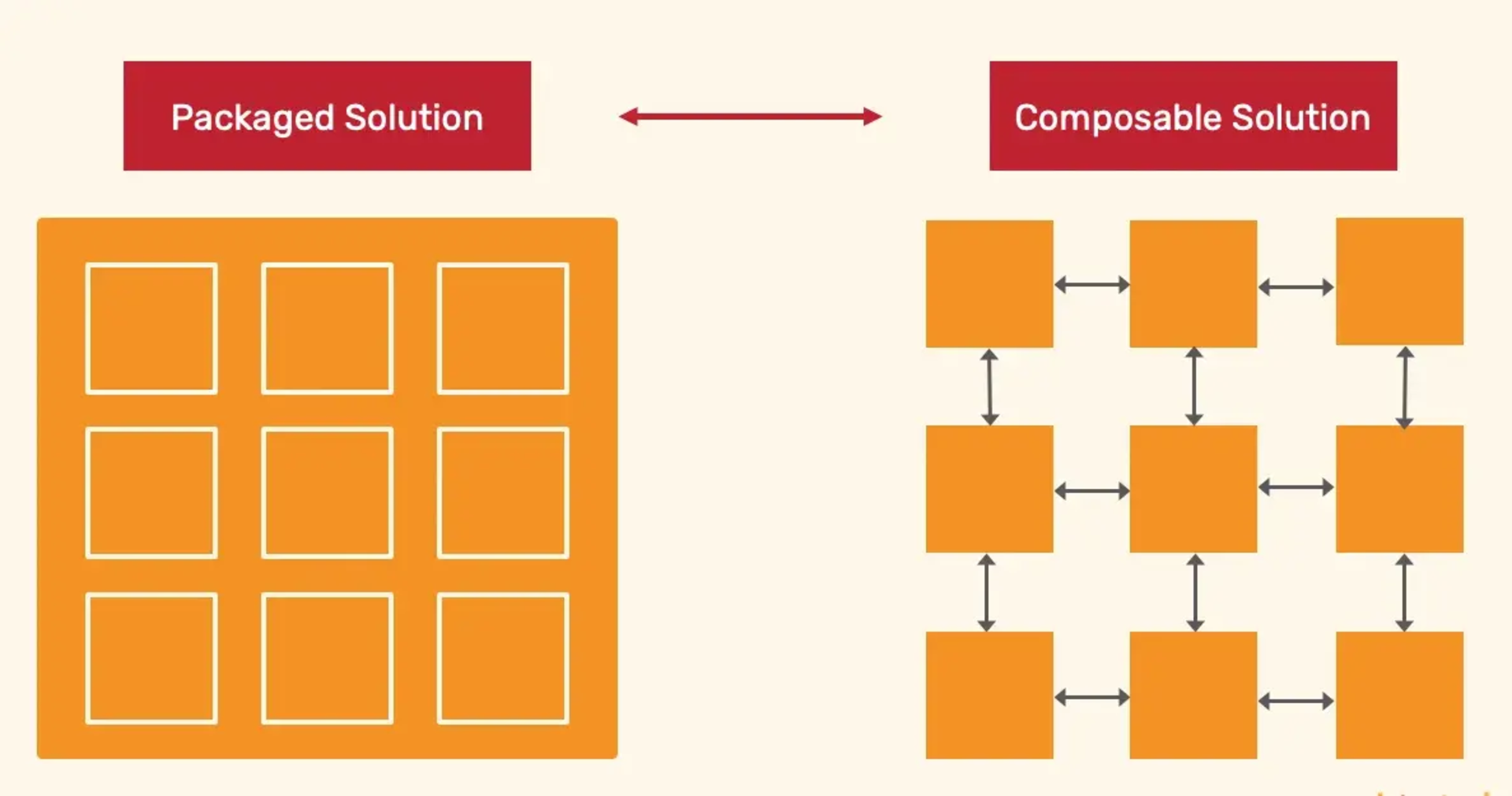
An example applied to the realm of Customer Data Platforms (CDP), a CDP typically exists of the following capabilities:
Data collection
Data storage
Identity resolution
Data transformation/enrichment
Audience building
Insights & reporting
Data science (propensity to buy, churn prediction)
Organisations looking to implement a CDP have the freedom to choose between a spectrum of different solutions, ranging from buying an all-in-one CDP solution to cover all capabilities or the go for a specialised solution for each capability and stringing those building blocks together into a working end-to-end platform.