- Eureka
Eureka! with Mieke De Ketelaere
“Suddenly, it became clear to me that customer data held a wealth of insights that could turn the marketing department from a cost into a profit center, simply through the application of data science.”
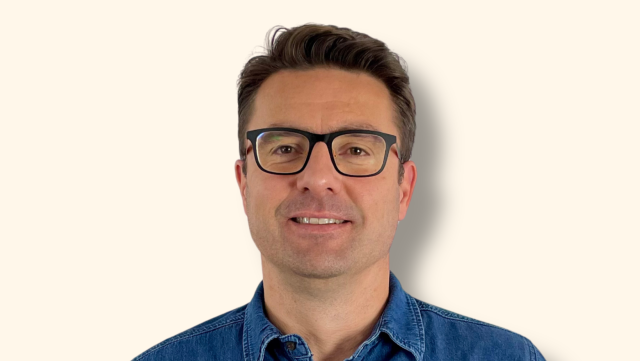
"AI can turn the marketing department from a cost into a profit center."
As program director AI at research center imec, Mieke De Ketelaere knows a thing or two about the societal and business impacts of data science and intelligent algorithms. But what does she find so fascinating about data that she decided to dedicate her entire career to it? And what illuminating insights brought her to where she is now? In this instalment of Eureka! we pick the brain of one of Belgium’s leading AI experts.
Then I realized: data has the power to turn the marketing department from a cost into a profit center.
She holds master’s degrees in civil and industrial engineering and has worked for tech giants like Microsoft, SAP, and SAS. With her team at imec, she explores how AI can create value for businesses of all kind. We meet with Mieke on the publication date of her first book: Mens versus Machine: Artificiële intelligentie ontrafeld (Man versus machine: AI explained). In it, she explains in clear terms what AI is all about and how it already impacts our lives today. In doing so, she expands upon some of the core themes of her career, such as AI’s energy footprint and its moral and ethical implications.
How did you end up building a career out of AI?
“As a student in industrial and civil engineering with a specialisation in robotics and process technology, I was already very familiar with the whole ‘input-process-output’ idea. Making the move to AI wasn’t a big step. In addition, the mechanical aspect of robotics was a male-dominated domain at the time – and I suspect it still is – so it made sense to focus more on software and algorithms instead.
“When I graduated in 1994, AI was going through one of its ‘winters’, a period of reduced funding and interest in research. As a result, I decided to leave academia and join software giants such as IBM, Microsoft and later SAS, where I was head of customer intelligence. During those 25 years, I constantly kept a finger on the pulse when it came to data and AI. I’ve always been fascinated by the concept of extracting value through algorithms and automated decisions. But recently we have reached a tipping point in AI, where the co-optimisation between software and hardware is becoming key in every AI solution we are going to create. That’s when I decided to renew my ties with academia and research and joined imec.”
I wanted to expand my vision to include both software and hardware, because it offered opportunities for co-optimization.
One of the overarching themes in your work is ethics and AI. How can companies balance ethical data collection and value creation?
“At the end of my career as head of customer intelligence at SAS, I often found myself in a conflicting position: during the day, I was finding new ways to ‘get into customers’ heads’ and predict their behaviour, while in the evening, I was preaching moralistic values on stage for the handling of personal data.
“Today, I truly believe that we’re moving past the era of unbridled collection of personal data. There are now many ways in which businesses can use AI ethically. Technologies like privacy-preserving AI and federated learning, for example, allow companies to gain insights without violating their customer’s privacy. One of the main ideas is that the data stays in the place where it’s generated, while the algorithm travels.
I truly believe that we’re moving past the era of unbridled collection of personal data.
“In my book I also discuss Solid, Tim Berners-Lee’s web decentralisation project. When his vision comes to fruition, users will be the sole owners of their personal data. They will decide who gets access and can easily switch between apps and personal data storage servers. A major advantage is that we become owner again of our own data, which puts us in a different relationship with companies such as Google, Facebook or Microsoft who are all centralising our data today in their own platforms.”
In addition to the ethical questions, what are some other key misconceptions about AI, and how do you believe we can solve them?
“You’ve probably guessed that I’m a firm believer of the value of AI. However, the current gap between believers and skeptics is significantly hindering innovation. In my opinion, this is the result of the field growing too fast. There hasn’t been any time to make AI comprehensible for people other than researchers or engineers. I guess we were just too excited to experiment and try new applications. As a result, many people today find it ‘too complex’ to deal with, while others have unrealistic expectations about what it can do.
“The main reason I wrote my book was to overcome this so-called ‘complexity bias’. Whether we like it or not, AI will have a huge impact on our lives. I’m convinced that every single one of us needs to take responsibility and get at least a notion of what it is all about. That’s the only way we, as a collective, can decide what we will and won’t allow. In my book, I talk a lot about the importance of ‘AI translators’: people who understand the implications of AI and can translate it for the broader population.”
Every single one of us needs to take responsibility and get at least a notion of what AI is all about.
Complexity bias is one thing, but what other considerations do companies need to make? How can they limit the potential risks in their automated systems? What responsibilities should they take?
“When building an AI solution, you first need to consider the context of the solution you are going to build: whether you’re using it to make decisions on an object or a person, for an individual or for a group, whether the impact is immediate or long term, etc. The result of this analysis will help you understand if an end-to-end automation in your solution is desirable. Some examples: When it comes to automated recommendation engines on web shops, the implications on our lives aren’t very severe. A personalized news feed, however, might not have an immediate effect on you personally, but on a longer time scale, it can have a polarizing effect on society. As a company, you want to make your user aware of this, just like we are made aware of the effects of long-term use of medication. Last but not least, a system that automatically selects the best candidate for a job position… that’s where things get risky and we touch upon the well-known problem of unconscious bias.
“AI critics, like mathematician Cathy O’Neil, often use examples of systems that have been automated end to end, without any form of human agency and critical analysis upfront. These systems have had a big impact on people in the real world. My advice to companies is to be absolutely vigilant at the start of the development of AI systems, and even more important, proactively prevent ways to correct course when needed.
“But it’s also important to keep in mind that not every problem with automated systems can be attributed to algorithms. Sometimes it’s just a human error. This can occur when models are trained in an environment different from the one in which they are eventually deployed. A typical example is a facial recognition model trained in Western countries and deployed in Asia. That might be a painful error, but in the end, it’s simply the result of a data scientist not receiving the proper context from the business.”
Data makes it possible to strike an optimal balance between internal financial goals and customer satisfaction.
The use of computer vision applications, like facial and image recognition, make sense in contexts like security and production. What do you think of the use of AI for marketing purposes?
“During my stint at Microsoft, I was asked by the management to join the marketing team. As an engineer specialised in robotics and AI, I was initially reluctant. Marketing was just branded t-shirts and pens to me at the time, I didn’t see how my expertise could offer any value.
“Soon, however it became clear to me that customer data held a wealth of insights that could turn the marketing department from a cost into a profit center, simply through the application of data science. The goal of a marketeer is to understand and predict the behaviour of customers, and to go from a push to a pull model. By making data-driven decisions, customer loyalty can be redefined. Additionally, it allows companies to strike an optimal balance between internal financial goals and customer satisfaction.”
What has changed in terms of the data marketeers get access too?
“In the past, all marketeers had access to the same sociodemographic data. Today, data can provide far more valuable insights. Based on your clicking behaviour, for example, AI can tell whether you are in a surfing or a buying mode. Insights like these are a dream for any neuro-marketeer. They say a lot about customer preferences and how to optimize for them. However, marketing professionals need to keep an open mind when it comes to interpreting the data and adjusting according to real-world feedback.”
“For a long time, especially in the US, there has been an unduly emphasis on hardcore marketing driven by personal data. In contrast, many European companies today are focusing on improving customer experience and services instead. In marketing, what one person experiences as inspiring can be highly irritating to someone else. Although my husband and I have almost identical sociodemographic profiles, we react very differently to certain forms of marketing. I absolutely hate it when my bank invites me to a face-to-face meeting to discuss investments. He loves that kind of personal approach.”
In marketing, what one person experiences as inspiring can be highly irritating to someone else.
And finally, do we, like Elon Musk, need to be fearful of AI?
“Someone recently sent me a great cartoon of an off switch, with the caption ‘man wins Go match against AI in just one set’. I mean, we need to remember that AI is just a tool, and that, in the end, we can switch it off at any time. It is not something we need to believe in, it is something that just needs to work following our human ethics.
“I like to think of AI more in terms of opportunities and intelligent inspirations from nature, as it allows us to achieve things that are beyond our human capabilities. Articles that mention how AI techniques like image recognition are deployed to protect bee colonies inspire me a lot. In my ideal world, AI will help us undo some of the damage we’ve done to the natural world.”
We need to remember that AI is just a tool, and that, in the end, we can switch it off at any time.
Need a comprehensive overview of AI, its implications, and what’s on the horizon? Grab a copy of Mieke De Ketelaere’s book Mens versus Machine (now in Dutch, French and English)